There are some movies that you just take for granted that they're supposed to be great, but that most people have probably never seen, let alone seen in a theater.
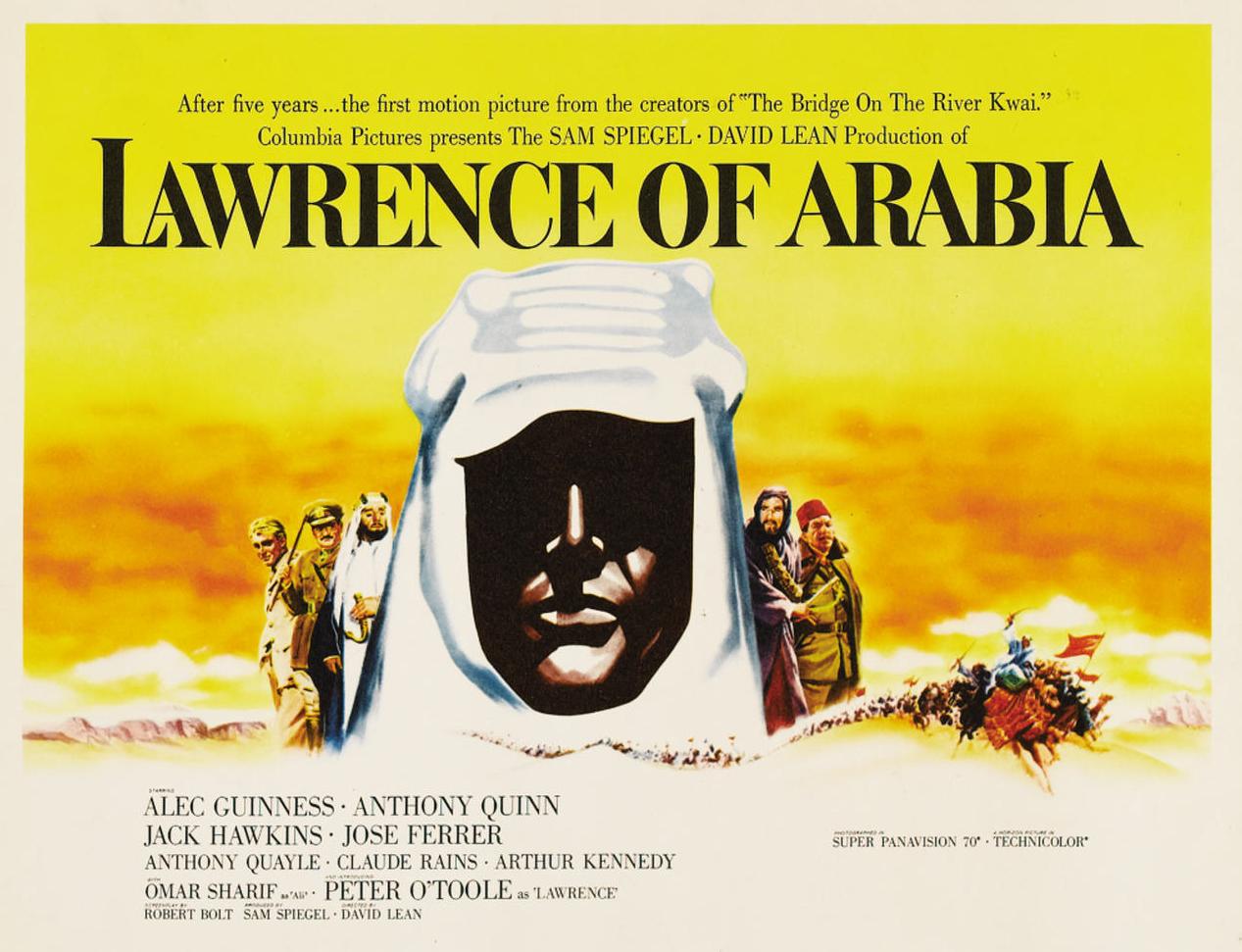
Lawrence of Arabia is one of those films. I consider myself very fortunate to have had the opportunity to actually catch it on the big screen for the very first time over 10 years ago at the Egyptian Theater in Hollywood as part of the American Cinematheque's 70mm Festival.
What was really amazing to me is just how utterly, overwhelmingly beautiful this film is as a purely visual, cinematic experience. The size of the canvas, the sheer scale of the storytelling, yet the exquisite, meticulous attention to detail in every frame is just breathtaking.
So breathtaking that, honestly, I really had no idea what was actually happening in the movie. I had no idea and, frankly, I didn't even care because I was enjoying the experience of the cinematic journey so much.
But, at the end of the day, I'm a storyteller, and it always nagged at me that I didn't actually get the story of such a great film. So when the opportunity came up again to watch it on cable (albeit with my beautiful but not quite as grandiose HDTV), I lept at the chance.
Now, if you only watch the first half of the movie up through the intermission, it's this incredibly uplifting tale about how one man was able to challenge convention to achieve amazing results and possibly remake a world for the better.
Very typical, Oscar-worthy fare. Very inspirational.
But if you stick around long enough to watch the end of the film, I gradually began to realize that it's actually a much more sophisticated story about the hubris and self-delusion inherent in the colonial system, and how even the most well-intentioned colonialist is still a supremacist. To see T.E. Lawrence brought so high as to be nearly deified, only to be literally thrown face-first into the bloody, mud-filled pit he'd dug at the bottom of his own soul is really surprisingly deep and moving today for a story so large. The journey is very deep and personal, while at the same time magnificantly broad and grand.
A great, complex movie. Oh, for the days.
David Lean clearly knew what he was doing and saying about his own home country, and I applaud him, Peter O'Toole, and their whole team. We should all be so bold in our storytelling.
Showing posts with label middle east. Show all posts
January 09, 2013
September 13, 2005
Films from the Holy Land
As most of you know, I spend a good chunk of the month of June in Israel, attending a class on Film Producing. In addition to praying at the Western Wall and standing on top of the hill where Jesus was crucified, I actually did do a lot of film related stuff there as well. Which included seeing some great films from the region.
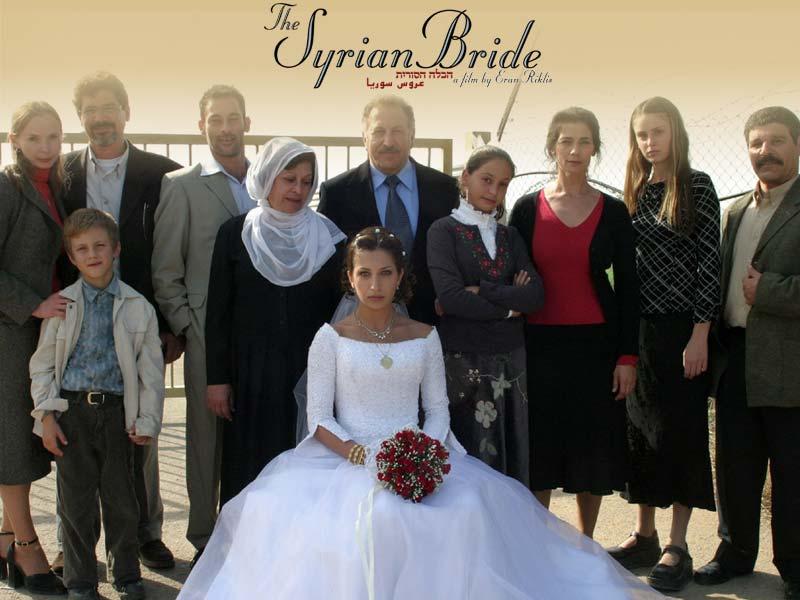
Case in point: "The Syrian Bride", from director Eran Riklis, tells the story of a young woman from the Golan Heights who's engaged to be married to a soap opera star in Damascus. The Golan Heights is part of territory that the Israelis seized from Syria during The Six-Day War in 1967, and Syria still considers it part of their country. In fact, the Druze, the ethnic minority who live there, including our bride, also consider themselves Syrian and many of them have refused Israeli citizenship. Her family is hoping she can have a better life in Damascus, and have agreed to this arranged marriage. But, because of the political situation, once she crosses over the border into Syria, she can never come back to Israel to see her family again. So, in many ways, her wedding day is like a living funeral. It's just an incredibly beautiful film that makes the politics of the region deeply personal. I don't know if it has an American distributor yet, which is a real shame. If you manage to catch it on video or at a festival, I highly recommend checking it out.
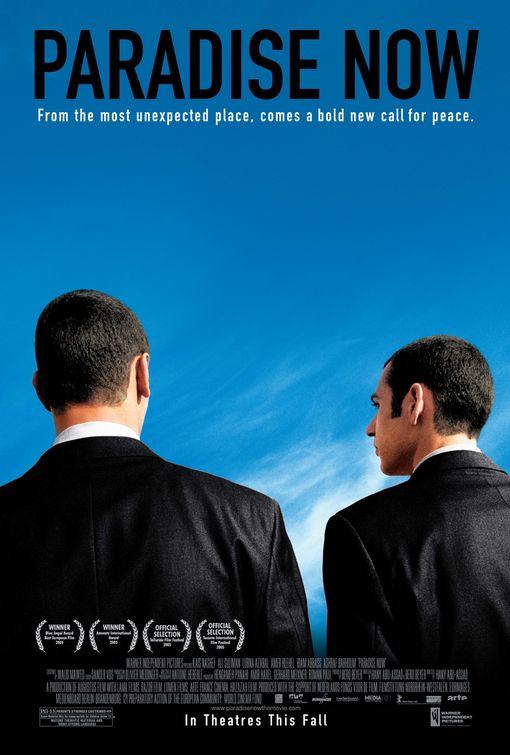
On the opposite end of the spectrum is the intense drama, Paradise Now. Produced by an Israeli, but directed by a Palestinian, it follows two Palestinian men who volunteer to become suicide bombers. You watch them transform from a pair of shaggy, laid-back auto mechanics, into sleek, focused, living killing devices as they prepare for their last day on this Earth. Then, the plan goes totally wrong and the two of them are actually forced to confront their reasons for volunteering in the first place. Again, an instance where the political is simply a manifestation of the violently personal.
When we screened this film during the class, once of the producers came to speak afterwards. Needless to say, a number of Israeli students gave him a real tongue-lashing for glorifying the suicide bombers. One of the Jewish American students even went so far as to accuse the film of being anti-Semitic because she was unsatisfied with how it depicted the impact of the bombers on Israeli society. In the end, all of his detractors felt that the film was unbalanced.
To which, I say, "of course".
Film is not journalism. It has absolutely NO obligation to be balanced. It's a story, and every story is entitled to it's point of view. Personally, I didn't think the film was particularly anti-Semitic because, quite frankly, you never see the Israelis. The Palestinian characters talk about them like they're an abstraction, in much the way a lot of Black Americans talk about "The White Man". The film had no intention to be balanced - it's a Palestinian story. An unpleasant one, I'll grant you. But, let's be honest - it's not like there is anyone who DOESN'T know the impact of suicide bombers.
I'm much more interested in "why?". Why would someone, another human being, with a family and a job and a life, volunteer to die just so they could kill complete strangers? I suspect that the answers lie in a despair that is so pervasive, that one can begin to feel that they're one of the walking dead.
While I was there, I also caught a free screening of The French Connection in honor of the director William Freidkin, who was in Tel Aviv directing an opera version of "Samson & Delilah". And, while that particular film is still fairly popcorn, the opportunity to hear Friedkin talk coincided nicely with these two Middle Eastern films. Freidkin told a story about his first film: when he was a young man working for a local TV station in Chicago, he met a priest at a party who worked on Death Row. Friedkin asked the priest if he thought any of those prisoners were actually innocent. When he told him yes, Friedkin grabbed a camera and a cameraman from his station and marched right down to the State Penitentiary. The end result was the TV documentary "The People vs. Paul Crump". Once that film found it's way into the hands of the Governor of Illinois, Paul Crump was granted a stay of execution.
In Freidkin's words:
Why am I saying all of this?
I am a filmmaker.
In fact, my first produced feature film could be coming to a theatre near you in 2006. But more about that much, much later.
I love movies, and I've loved them all my life. Perhaps they're why I don't really have a Baltimore accent - because I was spending more time with James Bond and Superman and Indiana Jones and Herbert West and Scotty Ferguson and Mike Church, than with the people across the street. But, I firmly believe that movies matter.
Vertigo matters to me.
Deeply. Emotionally.
Apocalypse Now matters to me.
Spiritually.
American Beauty matters to me. Crouching Tiger, Hidden Dragon matters to me. Menace II Society matters to me.
Even genre films like Forbidden Planet and Star Trek II and John Carpenter's The Thing or comedies like 50 First Dates or even a deeply flawed movie like Ali matter to me. They matter in my life.
And they matter not because they're historically accurate or chock full o' facts or a bold indictment of some great wrong.
They matter because they move me. They move me to laugh, or cry, or cheer, or scream, from some place deep inside my heart.
I was asked recently about a film I'd just seen in the theatres, which was #1 at the box office, and I couldn't give it a ringing endorsement. It had it's moments, and the actors were fine and the production was sound.
But, when the credits rolled, the audience simply filed out in silence. No chatter. No applause. Nothing.
In the end, this particular movie simply didn't matter to me. And, I suspect that many of my fellow audience members felt the same way.
The Syrian Bride and Paradise Now matter to the lives of thousands of people I'll never meet across Israel, who's stories may have never been told.
And they remind me that, when I make films, they must matter. First and foremost, they must move my soul first.
Case in point: "The Syrian Bride", from director Eran Riklis, tells the story of a young woman from the Golan Heights who's engaged to be married to a soap opera star in Damascus. The Golan Heights is part of territory that the Israelis seized from Syria during The Six-Day War in 1967, and Syria still considers it part of their country. In fact, the Druze, the ethnic minority who live there, including our bride, also consider themselves Syrian and many of them have refused Israeli citizenship. Her family is hoping she can have a better life in Damascus, and have agreed to this arranged marriage. But, because of the political situation, once she crosses over the border into Syria, she can never come back to Israel to see her family again. So, in many ways, her wedding day is like a living funeral. It's just an incredibly beautiful film that makes the politics of the region deeply personal. I don't know if it has an American distributor yet, which is a real shame. If you manage to catch it on video or at a festival, I highly recommend checking it out.

On the opposite end of the spectrum is the intense drama, Paradise Now. Produced by an Israeli, but directed by a Palestinian, it follows two Palestinian men who volunteer to become suicide bombers. You watch them transform from a pair of shaggy, laid-back auto mechanics, into sleek, focused, living killing devices as they prepare for their last day on this Earth. Then, the plan goes totally wrong and the two of them are actually forced to confront their reasons for volunteering in the first place. Again, an instance where the political is simply a manifestation of the violently personal.
When we screened this film during the class, once of the producers came to speak afterwards. Needless to say, a number of Israeli students gave him a real tongue-lashing for glorifying the suicide bombers. One of the Jewish American students even went so far as to accuse the film of being anti-Semitic because she was unsatisfied with how it depicted the impact of the bombers on Israeli society. In the end, all of his detractors felt that the film was unbalanced.
To which, I say, "of course".
Film is not journalism. It has absolutely NO obligation to be balanced. It's a story, and every story is entitled to it's point of view. Personally, I didn't think the film was particularly anti-Semitic because, quite frankly, you never see the Israelis. The Palestinian characters talk about them like they're an abstraction, in much the way a lot of Black Americans talk about "The White Man". The film had no intention to be balanced - it's a Palestinian story. An unpleasant one, I'll grant you. But, let's be honest - it's not like there is anyone who DOESN'T know the impact of suicide bombers.
I'm much more interested in "why?". Why would someone, another human being, with a family and a job and a life, volunteer to die just so they could kill complete strangers? I suspect that the answers lie in a despair that is so pervasive, that one can begin to feel that they're one of the walking dead.
While I was there, I also caught a free screening of The French Connection in honor of the director William Freidkin, who was in Tel Aviv directing an opera version of "Samson & Delilah". And, while that particular film is still fairly popcorn, the opportunity to hear Friedkin talk coincided nicely with these two Middle Eastern films. Freidkin told a story about his first film: when he was a young man working for a local TV station in Chicago, he met a priest at a party who worked on Death Row. Friedkin asked the priest if he thought any of those prisoners were actually innocent. When he told him yes, Friedkin grabbed a camera and a cameraman from his station and marched right down to the State Penitentiary. The end result was the TV documentary "The People vs. Paul Crump". Once that film found it's way into the hands of the Governor of Illinois, Paul Crump was granted a stay of execution.
In Freidkin's words:
"That's when I learned that a film can save a life."
Why am I saying all of this?
I am a filmmaker.
In fact, my first produced feature film could be coming to a theatre near you in 2006. But more about that much, much later.
I love movies, and I've loved them all my life. Perhaps they're why I don't really have a Baltimore accent - because I was spending more time with James Bond and Superman and Indiana Jones and Herbert West and Scotty Ferguson and Mike Church, than with the people across the street. But, I firmly believe that movies matter.
Vertigo matters to me.
Deeply. Emotionally.
Apocalypse Now matters to me.
Spiritually.
American Beauty matters to me. Crouching Tiger, Hidden Dragon matters to me. Menace II Society matters to me.
Even genre films like Forbidden Planet and Star Trek II and John Carpenter's The Thing or comedies like 50 First Dates or even a deeply flawed movie like Ali matter to me. They matter in my life.
And they matter not because they're historically accurate or chock full o' facts or a bold indictment of some great wrong.
They matter because they move me. They move me to laugh, or cry, or cheer, or scream, from some place deep inside my heart.
I was asked recently about a film I'd just seen in the theatres, which was #1 at the box office, and I couldn't give it a ringing endorsement. It had it's moments, and the actors were fine and the production was sound.
But, when the credits rolled, the audience simply filed out in silence. No chatter. No applause. Nothing.
In the end, this particular movie simply didn't matter to me. And, I suspect that many of my fellow audience members felt the same way.
The Syrian Bride and Paradise Now matter to the lives of thousands of people I'll never meet across Israel, who's stories may have never been told.
And they remind me that, when I make films, they must matter. First and foremost, they must move my soul first.
Labels:
filmmaking,
israel,
middle east,
movies,
paradise now,
the syrian bride,
william friedkin
Subscribe to:
Posts (Atom)