Showing posts with label history. Show all posts

February 01, 2013

In Defense of Uncle Tom


Hollywood Shuffle - NAACP & Uncle Tom

Honestly, it was something I'd never questioned.

For those of you who don't know, within the African-American community, an Uncle Tom is a race traitor: someone who would harm other Blacks to promote him or herself among Whites.  The term comes from an 1800's book by Harriet Beecher Stowe called "Uncle Tom's Cabin", set during the period of American slavery.

But, to be perfectly honest, I never actually knew what it was that Uncle Tom had done to sell out the other slaves around him.

This, of course, is why I love wikipedia.  After all, how could I have figured out everything I needed to know about Ayn Rand last summer without having to subsidize her books?

But that, my friends, is for another blog post.

Point being, I looked up "Uncle Tom's Cabin" and, frankly, I was shocked by what I read.

Here's the link to the plot synopsis - http://en.wikipedia.org/wiki/Uncle_Tom%27s_Cabin#Plot

Uncle Tom was a deeply Christian slave who bonded with certain whites in such a way as to convince them of his humanity.  His Christian faith sustained him as he withstood punishment from a hateful slavemaster because he would NOT whip the other slaves.  And when asked to rat out certain slaves who'd escaped, Tom held his tongue, protecting them, even as he's being beaten to death.  He even forgives the overseers for killing him.

Moreover, at the time that it was published, 1852, "Uncle Tom's Cabin" was seen as a key abolitionist text, one of the first to highlight the daily horrors of slavery.  It was loathed among the slaveholding class and the author was allegedly referred to by Abraham Lincoln himself as "the little lady who started this great war."

Unfortunately, history was unkind to this book's legacy.  As Reconstruction dragged on, Southern whites took to making blackface stage plays based on the book outside of Stowe's creative control, most of which depicted the near-saintly Uncle Tom as the exact opposite of the character's intention.

Honestly, I don't know what else to say, other than it pays to really know your history.

December 31, 2012

Review: Lincoln

One of the best things I've seen in the last year was Ken Burns' excellent Civil War documentary, but I was always fascinated as to the way all of the combatants referred to each major battle as, simply, "a fight".

Which is why the opening scene of Steven Spielberg's Lincoln is so effective: it is, essentially, a fist fight between hundreds of Confederate soldiers and Black Union soldiers in the middle of a muddy, blood-soaked field.

More than anything else, I was moved by the intimacy of this film.


 The war wasn't masses of nameless, faceless regiments moving along a chess board. It was a back breaking street fight to the death, fought among millions.  The debate in the congress over these lofty issues like personhood and citizenship immediately descends into a raucous shouting match full of insults and clever name-calling.  Average citizens come to the office hours of The President of the United States to settle a land dispute.

I was also particularly impressed by the rawness of the politics.  For something so lofty and noble as the abolition of slavery, Lincoln and his cohorts employed every conceivable trick in the book - brides, coercion, misdirection.  I'm reminded of a line from "The Kingdom of Heaven": "maybe one day you'll do a little evil to do a great good."

Reminder, again, that all politics are not just local.  They're personal.

I have some issues with the end of the film.  Frankly, I think the last five minutes are totally unnecessary and hurt the tone and style of the film.  But it's still exquisite.

January 16, 2012

Martin Luther King, Jr., in his own words, on his day

Nothing I can write could match what King says himself.

Listen to the WHOLE speech.  His last speech, the night before he was assassinated.
Martin Luther King, Jr: "Mountaintop" speech full length from Filip Goc on Vimeo. It wasn't just about race, or class, or labor. It was about keeping the promise of America for everyone. Forever.

January 11, 2012

Go See "Red Tails", the Tuskegee Airmen movie, next Friday, 1/20

First of all, let's start with the movie itself.  Here's the trailer for "Red Tails", George Lucas' big budget action movie about the Tuskegee Airmen.


Looks pretty awesome, right?  Action, history, social drama, good clean fun.

Also looks pretty expensive, too.

And to that point: here's an interview George Lucas did with The Daily Show where he broke down in really stark terms how no one in Hollywood wanted to finance this movie because it has all Black actors in the lead roles.


So, you all have heard me railing against the evils of Tyler Perry movies for a long time.  But, as the Emperor of Star Wars points out, the studios are happy to make more Medea movies because they're dirt cheap, so they can always turn a nice little profit from the niche audience of people who like to watch 6 ft. tall Black men disgrace themselves, our mothers, and our grandmothers all in one single performance.

But the Tuskegee Airmen are real heroes: men who risked their lives to save the lives of others.  Literally.  Black men who stood up to be counted.  Americans who embodied the very best of all of us.

Real role models.

And the movie looks like it will be very, very good.

I'm tired of only seeing Black actors in movies that are either about crime or relationship drama.  We have SO many more stories to tell.

Why do you think I love "Event Horizon" so much?  :-)

I feel like I see these sorts of pleas all the time, but this one is pretty serious, because if this movie, from one of the few untouchable filmmakers in the world, bombs, it's going to be extremely hard to get some more diversity in Black cinema.

In short, get all of your friends, and all of your friends' friends, and go out on opening night next Friday, January 20th, and actually BUY A TICKET for "Red Tails".

This one is important, folks.

September 23, 2011

The Record or how Facebook is literally rewriting history


I had a true "a-ha" moment today, sitting in the hall listening to Mark Zuckerberg give his keynote address at F8, Facebook's annual developer's conference.

To coin a phrase, history isn't just written by the victors. It's written about the victors: the people we've all some how collectively deemed important and significant. But, in Facebook's perfect world, by introducing their new timeline feature, they want to write history about EVERYONE.

Every action and relationship and preference for every single human being on the planet.

So, a billion years from now, when our sun has gone supernova and even our graves have been reduced to cinders, if someone has the presence of mind to stick Facebook's user database on a truckload of drives and shoot it into space before the end, some alien civilization will know exactly when my niece graduated from high school, and what kind of music my coworker liked to listen to and when my classmates' babies were born and when I got engaged and how much we loved each other. And they'll know that about all of you, too.

It's a true history of the human race, were we all matter enough to be cataloged.

Too romantic? Probably. But its a nice dream, and worthy of aspirations.

July 29, 2010

Things I Didn't Know About Black America: Clarence Thomas

Thanks to my fellow netizen Brokenbeatnik, I came across the Washington Post article about the opinion Clarence Thomas wrote supporting the Supreme Court's decision to strike down Chicago's anti-handgun law as an unreasonable restriction of the 2nd Amendment.

Now, ordinarily, I'm not big on gun rights (after all, as my brother always says, nobody in the hood manufactures Uzis), and I'm really not crazy about Clarence Thomas, but I've gotta say, he really caught my eye with this opinion.  If you look at the nearly 20 page paper he wrote, you see that his vigorous defense of 2nd amendment rights is founded in his own first hand experience, I'm sure, of growing up in the Jim Crow South.

Cue Wikipedia again.

I didn't realize that Thomas' home town was founded by freed slaves, or that Gullah (or Geechee) was the spoken language in his home.  I didn't realize the man didn't live in a house with in-door plumbing until he was 7 years old.  I didn't know that he dropped out of seminary after hearing his classmates celebrating Martin Luther King's assassination.

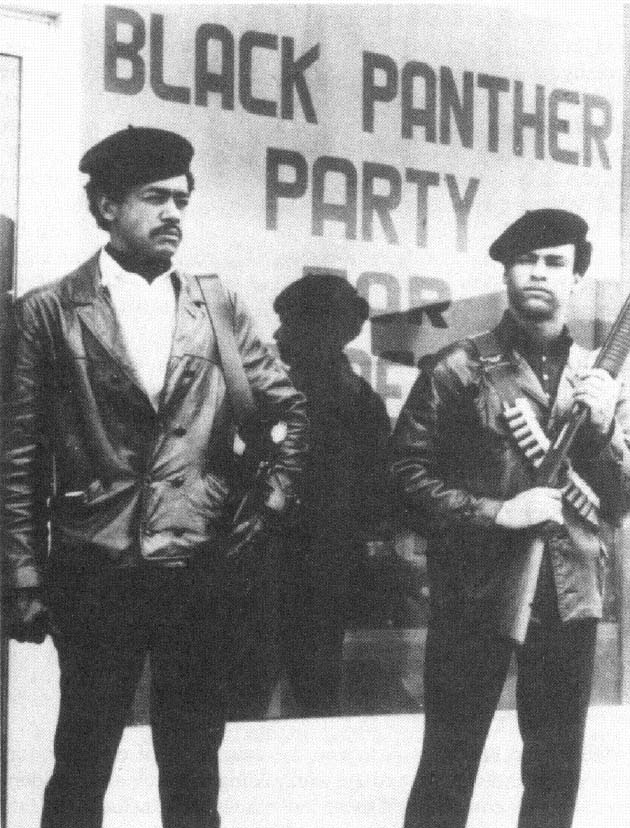
If I did, I shouldn't have been surprised that, in his mind, the Federally protected right to own a gun, unabridged by a local or state authority, was the only think protecting him & his family (heck, even his whole home town) from organized, often local government sanctioned, white racist terrorism from the likes of the Ku Klux Klan and God knows what else.  Justice Thomas practically echoes Rob Brown's book "Negroes With Guns", a tome of self defense that became the cornerstone of Huey Newton's thinking in founding the Black Panther Party.  I have huge problems with many of Brother Clarence's votes, and I'll disagree with him with a lot of things, but I doubt I'll ever question the sincerity of his intentions again.

It reminds me of how I used to think of Condolezza Rice:  she grew up with the same four Black little girls who were murdered in the 16th Street Baptist Church bombing of 1963 that Spike Lee featured in his documentary "Four Little Girls".  I used to think, "How can she not be more super-pro-Black nationalist after having lived through the horrors of that era?"

But Thomas reminds me that, while many Black folks were radicalized by the internal terrorism of the late 50's and '60's, just as many were raised in households more aligned with Booker T. Washington's thinking than, say, my man W.E.B. DuBois.  That the best revenge was success & dignity in the face of the terror, and those children like Clarence Thomas or Condolezza Rice or Colin Powell owed it to the people who died to reach and strive as far as they could.  So many radicals who didn't have access to the opportunities they had ended up dead, incarcerated, or ostracized.

Huey Newton?  H. Rap Brown?  These are not stories with happy endings.

But are those the only choices?

One could argue that Clarence, Condolezza, & Colin and many others like them earned their success by turning their backs on the broader Black community.  Yes, they're all involved in charity and philanthropy, but when decisions were made in their midsts regarding economic policy, war policy, social policy, and the like that had a direct impact on African Americans at large, did they really do all that they could to protect their voiceless brothers and sisters?

I don't know.

Just like I don't know what sort of sacrifices they had to make in order to reach their positions.  Does their mere presence in those positions carry more weight than their actions while in those positions?

My generation came of age in the post-"Black is Beautiful" era.  We take our ethnic pride and abilities as a given.  But that has not always been the case.  Folks like Clarence and Ward Connerly and others carry the scars of de-legitimacy to this day.  And the memories of the horror probably never go away.

I find myself thinking a lot about "The Spook Who Sat By The Door" as I read about Clarence Thomas this week.

Just getting to the door has been so hard for so many.  But does simply sitting there make it easier for others to join you and/or walk through?  Or are you responsible for wedging it open, no matter the personal cost?

Spook Who Sat By the DoorNegroes With Guns (African American Life Series)UP FROM SLAVERY: AN AUTOBIOGRAPHY

May 11, 2009

Ground Zero

I'd been going back through my old, unfinished drafts here on Macroscope when I came across this old article I'd saved from The Atlantic. It's a letter from a woman who was in Hiroshima on the only day that most of us in the rest of the world know anything about Hiroshima, and how, as Wayne Gale would put it, she lived to tell the tale.

Choice quote:

I rubbed my nose and mouth hard with a tenugui (a kind of towel) I had at my waist. To my horror, I found that the skin of my face had come off in the towel.


This, my friends, is pure, unadulterated horror.

But worth a read when we consider the modern state of nuclear proliferation.

The Atlantic | August 1980 | 'I Thought My Last Hour Had Come...' | Guillain

February 05, 2006

The Original

In Monroe, North Carolina in the 1930's, many young Black girls worked as domestic servants & whatnot in the white households on the other side of town. These girls were often forced to walk home at night on unlit country roads, where they would routinely be terrorized by white men driving along the same way.

Rob Williams was a teenager at the time. He and a couple of his buddies started camping out in the woods along those same roads at night. And when a truckload of rednecks would ride pass and try to harass a young sista just trying to make it home, Rob & his buddies would stone the rednecks.

The harassment stopped.

I believe he got his first gun from his grandmother.

As you can see, very little had changed about Mr. Williams by the time he'd grown up.


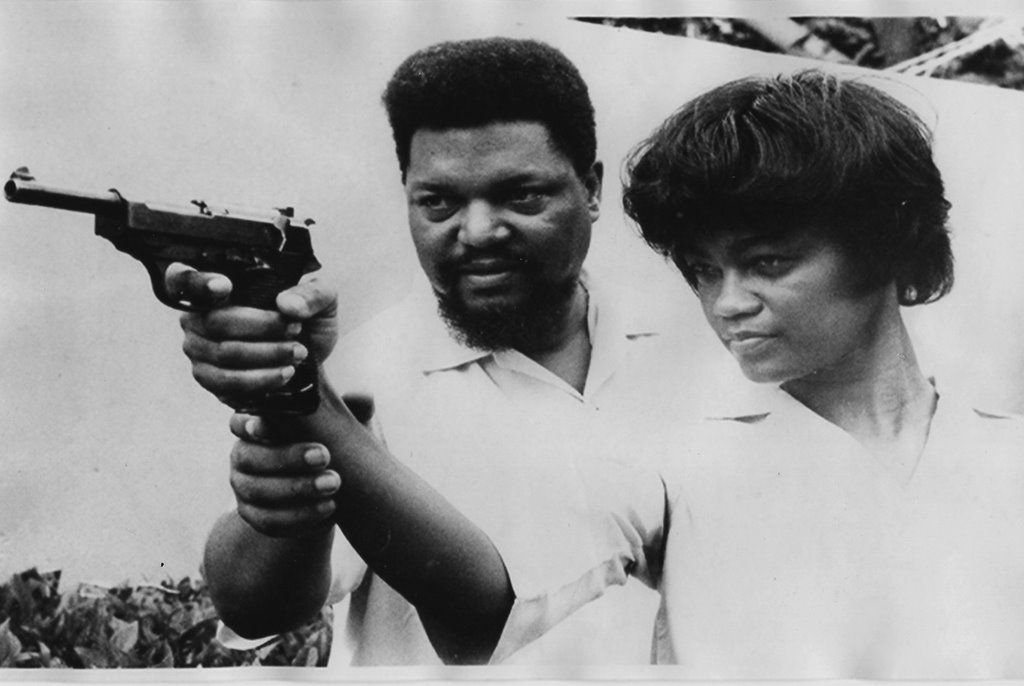
In 1962, he published a manifesto called "Negroes with Guns" which eventually found it's way into the hands of another young man named Huey Newton.

And the rest, as they say, is history.

This month, PBS is airing a documentary on the life and times of Rob Williams, entitled, (surprise-surprise) "Negroes with Guns". I had the great fortune of seeing this film at the 2004 Los Angeles Film Festival, and I'm so happy to see that it actually got some sort of wide distribution.

If you want to get a better idea of the origins of the Black Power movement, I highly recommend it. Click the link in the title to find out when and where it's playing in your town. Or just go to PBS.org.

You can also still buy Mr. Williams' book, here from Amazon.com:


October 15, 2003

Willie Lynch is Dead (1712?-2003)


There is No Willie Lynch
OK, this is something I've believed for years, so I'm glad to see someone has finally done a little research to support my theory.

For those of you who don't know, allegedly, there's a copy of a speech written by a slave holder named Willie Lynch to instruct his peers on ways to foster disunity among the slaves as a means of nonviolent pacification. The basic idea is that, if you're too busy fighting your brother, you won't worry about the boot of the oppressor on your neck.

OK, so, for the moment, let's ignore the rather absurd image of the keynote speaker at the Colonial Slavedrivers Convention.

This gentleman, Dr. William Jelani Cobb of Spelman College, points out the obvious inaccuracies, inconsistencies, and anachronisms in the letter itself in this column.

But, at a deeper level, when have young people ever needed someone to tell them to hate old people? When have men ever needed to be formally instructed to hate women? And when have people ever needed a coach to instruct them how to hate people who look different than them? The crux of the Willie Lynch argument is that, if it wasn't for the damned white man, all Black people everywhere would all just love each other and work in spiritual-humming unison towards our common goal.

I'm sorry, but that's simply rediculous. All you have to do is look at the example in the master's house itself. Even rich white people can't get along with each other. As long as human beings have individual & conflicting needs, there will never be a united hive mind where we all agree to do our part & not hate on each other. It's human nature.

But this gets at the larger problem with conspiracy theorists. I think alot of people would much rather that there actually was an all-powerful boogeyman who has some massive document stored on his laptop called toying_with_everyone_elses_lives_for_my_amusement.pps. The idea of a malavolent controller can be far more comforting than the alternative: a world where, sometimes, bad things happen that are completely outside of anyone's control. After all, a bad daddy is better than no daddy at all, right?

Willie Lynch is a fairy tale. Rather than expending our energy assigning blame, maybe everyone (black, white, etc.) should devote their time to doing the things WE ALREADY KNOW WE"RE SUPPOSED TO BE DOING, i.e. treating members of the opposite sex with at least courtesy to give folks the chance to earn our respect; honoring the elders who've been where you're going while respecting the young for their fresh energy; KNOWING (and I don't mean just saying it, KWOWING) that you have intrinsic value because you are a living, breathing human being and not worrying whether some other person is more valuable than you because they're lighter/darker/taller/shorter/skinnier/fatter/etc.

To Hell with Willie Lynch.

Keep working on yourself.

October 01, 2002

Haley's widow sells "Roots" for a song
Given the impact that "Roots" has had on the lives of so many people of color, I'm deeply disturbed that his wife was not able to reap enough royalty fees to avoid bankruptcy. I'm even more disturbed that she apparently had no one to go to for help before she was reduced to this. Revs. Jackson & Sharpton are so lathered up about a movie: where were they when a survivor of one of our icons needed help?

September 30, 2002

Is BARBERSHOP right about Rosa Parks?
Simply reinforcing Eddie's point - there are some things we, as Black people, need to get real about. What's interesting to me is that the mindset that unfairly criticized this movie is similar to that which led to certain Rosa Parks progenitors being denied their place in history, i.e. we need perfect symbols, not flawed human beings, to rally around.